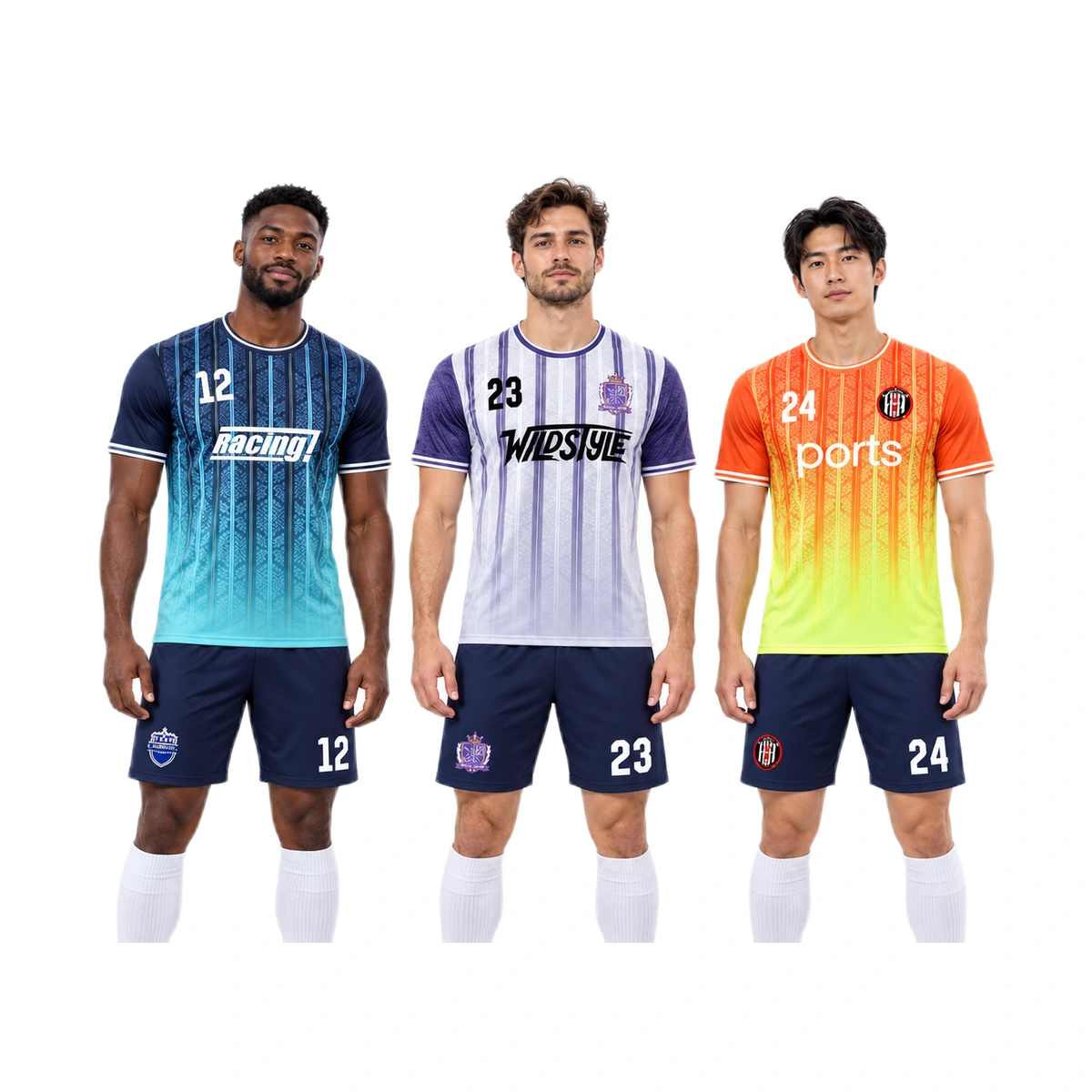
Yes. A club can share its crest, colors and lettering across custom jerseys for soccer and basketball. The useful starting point is one brand brief with two sport-specific product specifications. Copying one flat garment drawing onto both styles creates avoidable problems with fit, visible artwork space and what the order actually includes.
This guide is for a club buyer coordinating both programs. The example below is a planning scenario, not a completed customer order. The featured image is a catalog soccer design visualization, not a photograph of a delivered multisport project.
Separate the club identity from the garment template
Create a one-page identity sheet containing the approved crest file, color references, club-name spelling and lettering style. Mark which elements must remain consistent and which may adapt. A crest can remain recognizable even when its finished dimensions differ; forcing identical dimensions onto every chest is a different and often less useful requirement.
| Keep common | Specify separately |
|---|---|
| Club crest and approved spelling | Chest placement and finished logo dimensions |
| Primary and secondary color references | Fabric selection and physical color approval |
| Overall lettering character | Number position, size and organizer requirements |
| Approval owner | Garment pattern, size chart and included kit items |
Give each sport its own layout
Custom soccer jerseys have sleeve, neckline and chest spaces that differ from basketball jerseys. Basketball armholes and side panels also change where artwork can sit. Ask for each design on the actual proposed garment template rather than approving a generic front-and-back rectangle.
For custom basketball jerseys, check how the club identity works with the intended front and back numbers. For soccer, review the crest, sponsor area and back identification together. Obtain the current requirements from each competition organizer; a familiar design from another league does not confirm compliance. Review the smallest ordered size in each sport before approving the full size range.
Build two order lines, even when there is one budget
Imagine a club needs 54 soccer sets and 54 basketball sets. Record those as two lines, not simply 108 uniforms. For each line, identify whether the quotation includes a jersey, shorts and any other item. Then attach that sport’s size allocation and artwork version. A combined spending figure should not hide different products.
InkSportPro soccer and basketball uniform orders normally start at 50 sets. Confirm how the proposed designs and colorways qualify separately. A total of 108 does not establish that any alternative split or small additional design meets the minimum.
Approve the pair together, then release each specification
Place the two proposed garments side by side when reviewing identity. Check whether the crest, principal colors and club name still read as one program, while judging fit on the appropriate wearers. If matching color across different fabrics matters, compare the proposed physical materials under the same viewing conditions; identical screen values alone are insufficient evidence.
Keep a final checklist with two approvals: shared identity approved, and each sport’s product specification approved. Do not let a club-wide logo approval stand in for size, kit-content or competition checks. List unresolved differences before authorizing production so a later change to one team does not silently alter the other.
Prepare a multisport inquiry
Send the shared brand sheet and two separate quantity schedules. Review soccer kit options and basketball uniform options, then request a quote for the two product lines. Ask for set contents, design treatment and delivery timing to be confirmed for each line.