
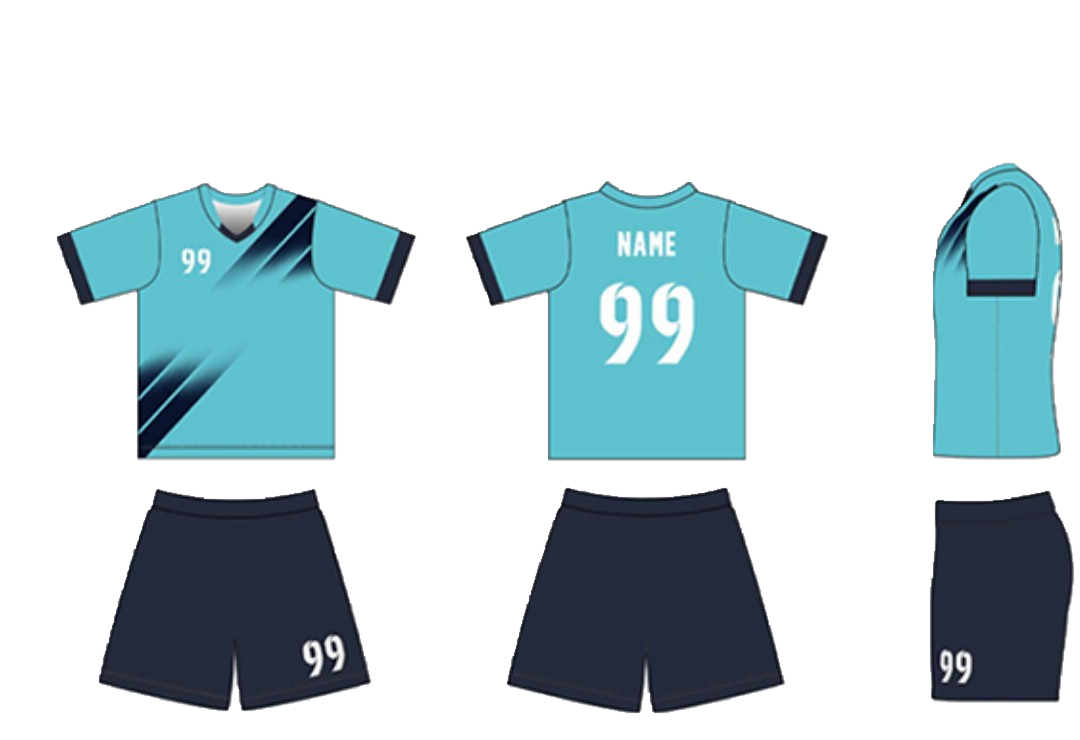
Managing soccer uniform laundry is also an inventory task. A club needs every jersey and pair of shorts returned, cared for according to its own instructions, and matched to the correct wearer before the next fixture. Use one return record, separate unsuitable items before washing, and check the complete set again before distribution. This guide is a suggested club workflow, not a universal wash specification.
Start with the instructions for the actual soccer uniform
Read the care label on both the jersey and the shorts. Ask the supplier to clarify any conflict between the garment label and separate instructions for a crest, sponsor print or player number. Do not choose a temperature from the word “polyester” alone. The completed garment includes trims and decoration as well as its main fabric.
For a concrete example, the official Borussia Dortmund care guide recommends turning its jerseys inside out, sorting colors, using a delicate cycle at no more than 30°C and avoiding tumble drying. Those are instructions for the products covered by that guide; they do not establish the care specification for every custom soccer uniform. Obtain your own approved instructions before sharing a club care card.
Create a soccer uniform return checklist
Use a garment identifier rather than relying on a pile count. The same player may have a home shirt, an away shirt and shorts in a different size. A jersey number can identify a piece within one team, but may repeat across age groups. Add a team or squad reference so number 12 from two squads cannot be confused. Keep personal information out of any publicly shared laundry sheet.
| Record field | What the coordinator records |
|---|---|
| Team and set reference | Squad, home or away version, and internal set ID |
| Jersey returned | Number, garment size and yes/no status |
| Shorts returned | Garment size and yes/no status, recorded separately |
| Condition before care | Stain, snag, loose trim or print issue requiring review |
| Care route | Approved instruction reference and responsible person |
| Ready for issue | Clean, dry, checked and paired, or held for review |
For example, a return of 18 jerseys and 17 pairs of shorts is 17 complete sets plus one unmatched jersey, not 18 ready-to-issue sets. Mark the missing component immediately. If one jersey is held for inspection, distinguish “returned” from “available”; otherwise the next team manager may discover the shortage only when packing for a match.

Separate collection, washing and ready-to-issue stock
Give collected clothing, items awaiting review and completed sets distinct locations or clearly labeled containers. Count garments at handover to the person responsible for washing. If players wash their own uniforms, send the same approved care instructions to each household and set a return deadline that leaves time to inspect and complete the team allocation.
Group items only when their labels, colors and decoration instructions are compatible. Do not assume an older away jersey and a new home jersey share the same care route. Record an unfamiliar garment separately until its instructions are confirmed. Remove loose belongings from the collection before it reaches the laundry, and keep boots and other equipment outside the clothing workflow.
Protect names and numbers without guessing the printing method
A sponsor, crest and player number on the same shirt may not use the same application method. A photo alone is insufficient to identify all of them. Record any lifting, cracking or discoloration before treatment, and ask for product-specific advice when a damaged area makes the normal care instructions uncertain. Avoid experimenting with a new stain chemical or repair technique on a visible graphic.
Community discussions such as this question about washing jerseys with names and numbers show the kind of uncertainty wearers face. Comments are individual experiences, not evidence that one household technique is safe for every decoration system. A club should issue the approved instruction sheet rather than a collection of conflicting social-media tips.
Check, pair and release soccer uniform sets
After the approved care and drying process, check each piece against its return record. Confirm that it is ready for storage before packing it away. Reunite jersey and shorts by the recorded sizes and set reference, not simply by whichever pair is nearest. Leave any unresolved item clearly marked as unavailable and tell the coordinator what replacement component would be needed.
Use a second person to reconcile the ready-to-issue list before a tournament or an away fixture. This is an administrative cross-check, not a garment performance test: compare total complete sets, spare pieces and held items. Keep spare sizes visible in the record so a missing pair of shorts does not automatically become a request for an entire replacement uniform.
What to record when a care problem occurs
Retain the item and photograph the affected area and care label. Note the garment reference, pre-wash condition if known, actual cycle and drying method, and any treatment used. Separate observation from explanation: “number edge lifted after washing” describes the result; it does not by itself establish whether production, wear or care caused it. Send the record for review before attempting a repair.
Questions to settle before the next custom order
Ask for final garment care information during sample approval, and include label and packaging requirements in the written brief. Keep the approved care sheet with your delivery inspection record. Confirm replacement quantities separately; a club laundry routine does not imply that small individual reorders are available.
InkSportPro custom soccer uniforms comprise a jersey and shorts, normally from 50 sets per order. Fabric, care instructions and the production schedule are confirmed for the selected style. Send your team quantity, artwork and required arrival date to discuss a new order or ask about replacement requirements.