Quick answer: Ask how the supplier checks the features that matter to your order and what evidence you will receive. For baseball jerseys, useful topics include the closed placket, garment measurements, player details, finishing and packing. “High quality” is not an inspection method.
Start with the order’s highest-risk details

A plain practice top and a full-button jersey with a large script wordmark do not create the same inspection priorities. Identify the details that would make your particular order unacceptable if wrong.
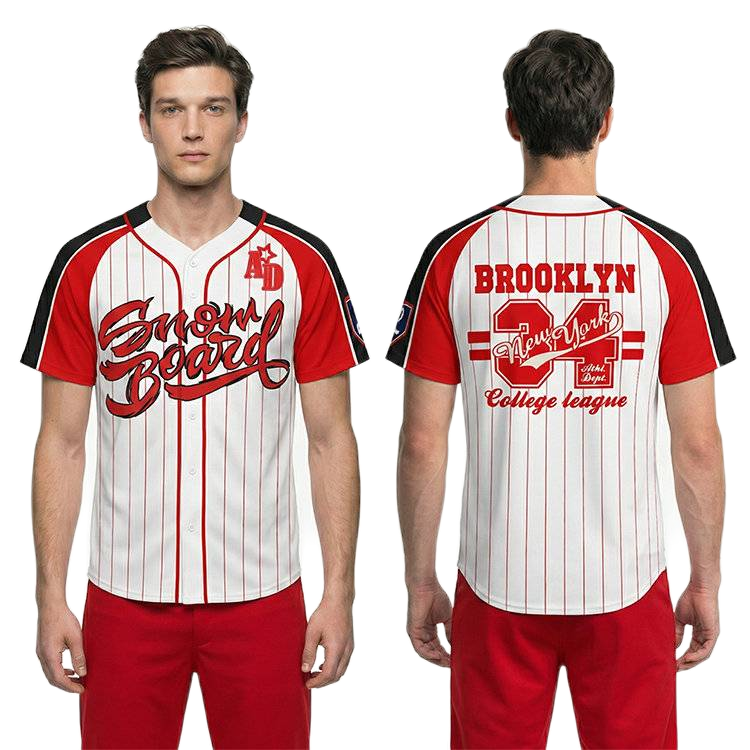
For a front-spanning graphic, mark the critical joins and request a view of the buttoned garment. For personalized orders, focus on the connection between names, numbers and sizes. For a multi-squad shipment, packing identification may be equally important.
Turn broad claims into specific questions

| General claim | More useful question |
|---|---|
| Excellent printing | Which artwork details will be reviewed on the selected material? |
| Good alignment | How is the chest graphic checked with the front fastened? |
| Accurate sizing | Which measurement points and agreed tolerances apply? |
| Correct personalization | How is the final roster tied to each garment? |
| Reliable packing | How are garments grouped and identified before dispatch? |
The purpose is to understand the process, not to demand evidence the supplier never offered. If the project requires a particular test report or inspection standard, establish that requirement before accepting the quotation.
Distinguish process descriptions from proof
InkSportPro describes a workflow including customer design approval, full-scale digital printing, automated laser cutting, hanging-system assembly, garment checks, pressing, packing and outbound inspection. That sequence explains the intended production flow.
It does not by itself establish a numerical defect rate, a named certification or a universal alignment tolerance. Ask what project-specific records or sample photographs can be provided, and agree the acceptance basis in writing.
Inspect material and construction together
Confirm the fabric reference, polyester composition and nominal weight. A correct fabric label does not prove that the finished size, button placement or graphic join is acceptable. Review those features on the assembled garment.
For the three offered baseball materials, do not infer moisture-wicking, abrasion or UV-protection ratings from GSM or surface texture. Request evidence if such performance is part of the buying requirement.
Control changes after sample approval
Ask how a change to artwork, material or roster will be recorded. The best inspection reference is less useful if production quietly moves to another revision. Save the accepted sample and final specification with the release-to-production message.
If a problem is found, describe the affected feature and compare it with the approved reference. Clear evidence makes a correction discussion more productive than a general statement that the uniform “does not feel professional.”
Agree the buyer’s own receiving check
Plan to reconcile carton contents, quantities and player packs on receipt. Keep the order breakdown available so that a missing item can be identified precisely. Document any issue promptly through the agreed communication channel.
Should every buyer demand a particular AQL? An inspection standard should suit the project and be agreed, not inserted as an unexplained acronym.
Can a lifestyle image prove quality control? It illustrates appearance. It cannot replace sample inspection or the agreed production checks.
Use the factory information page as a starting point for a more specific conversation.
Explore InkSportPro baseball uniforms or send a project brief with artwork.