Quick answer: Birdseye and straight-texture describe different surface appearances in InkSportPro’s fabric selection. Compare them using actual swatches and the same printed design. A fabric trade name does not establish test results, and straight-texture fabric is not the same thing as a printed pinstripe design.
Separate the fabric from its decoration

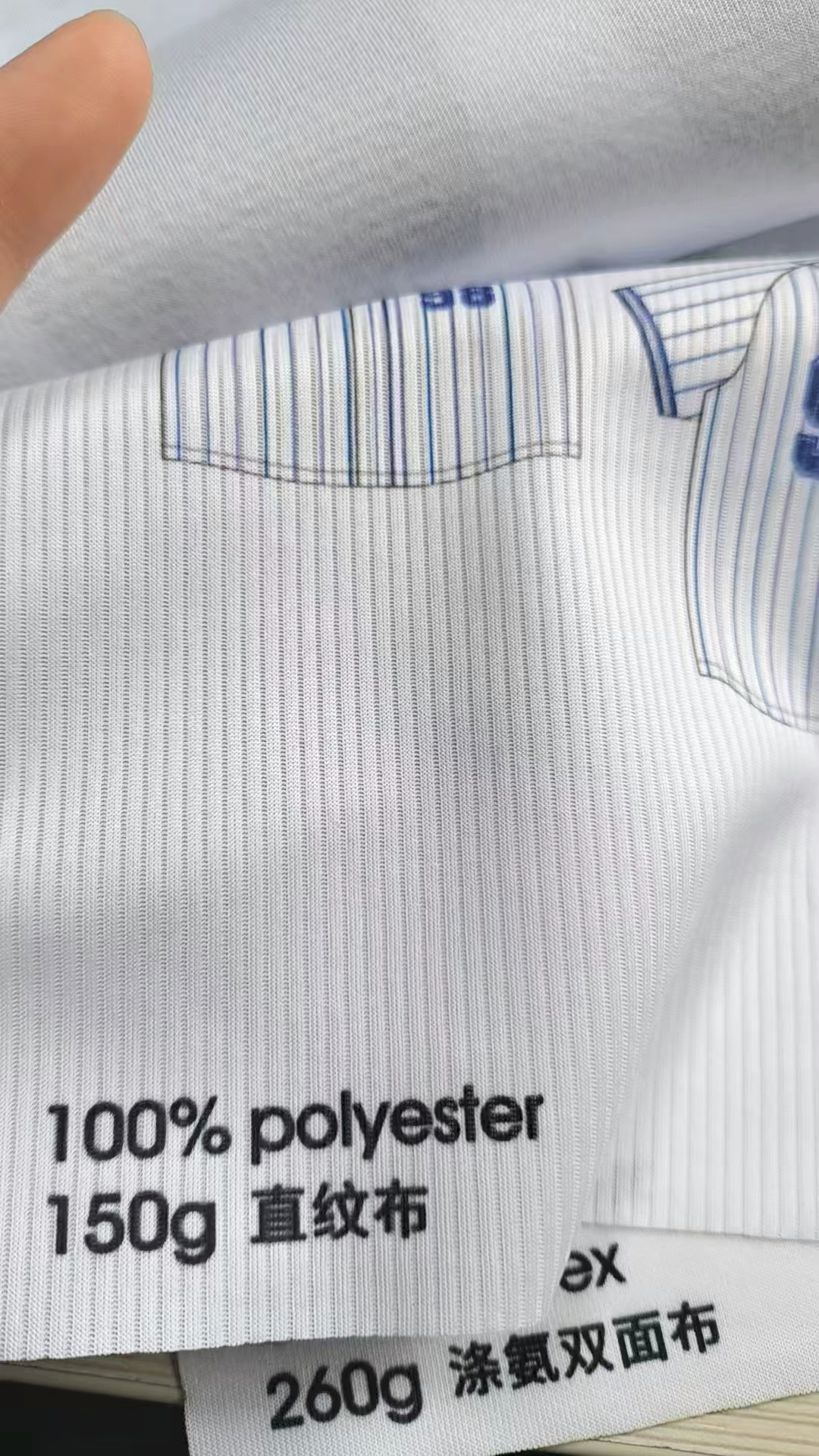
A baseball jersey can show vertical stripes because stripes were printed on it. That says nothing by itself about the structure underneath. Likewise, a photograph of a textured white swatch may contain a printed graphic, a fabric surface pattern and shadows from folding. These should not be treated as one feature.
InkSportPro’s supplied 180g birdseye photograph shows a small repeating surface texture. Its 150g straight-texture photograph shows a more linear-looking surface. Both swatch labels identify polyester, and the owner confirms 100% polyester for all three available options. The company uses “straight-texture” as a trade description; this guide does not infer a woven construction from that wording.
The three options to specify

| Option | Confirmed composition | Available visual evidence |
|---|---|---|
| 180g birdseye | 100% polyester | Owner-supplied swatch photograph |
| 150g birdseye / pinhole | 100% polyester | Owner describes a similar appearance to 180g birdseye, but thinner |
| 150g straight-texture | 100% polyester | Owner-supplied swatch photograph |
Treat these weights as nominal trade specifications and confirm GSM in the written order. If you require a specific air-permeability, stretch, colorfastness or moisture-management result, request the appropriate evidence. None of those properties can be established from the fabric name alone.
Print the details that matter to your team
A plain swatch can help you judge feel, but your uniform will carry artwork. Ask to compare a small script word, a solid team-color area and a narrow outline on the chosen fabric. Use the same artwork at the same size so that differences are easier to interpret.
If the team name crosses the front opening, examine the printed material in an assembled sample as well. Texture selection and placket alignment are different decisions, yet both influence how the chest graphic looks. A clean print on an unsewn piece does not prove that the two front panels will reconnect correctly.
Check coverage in the actual color
A dark graphic can conceal issues that become noticeable on a large white panel. Review light areas with the intended undershirt, under ordinary room lighting and in daylight. This is a practical approval exercise rather than a universal pass/fail test. Agree the conditions relevant to the club before accepting the material.
Keep the swatch label visible in approval photographs. Phone photos of two similar-looking fabrics are easy to confuse, particularly when one is a thinner version of the other. Record the supplier reference alongside each image rather than renaming both files “mesh sample.”
Turn a preference into an order specification
State the chosen fabric, nominal weight, polyester composition, jersey style and approved artwork revision. If a different fabric is proposed later, ask whether the change affects the quotation, color sample or production schedule. Approve the substitution explicitly.
Does “pinhole” automatically mean more breathable? No. It is a descriptive term here, not a measured airflow claim.
Can I use the 180g photo to judge 150g birdseye? It can illustrate the family resemblance described by the owner, but it cannot stand in for a separate physical sample.
Use the custom-order checklist to include material selection in the same approval record as sizing and artwork.
Explore InkSportPro baseball uniforms or send a project brief with artwork.